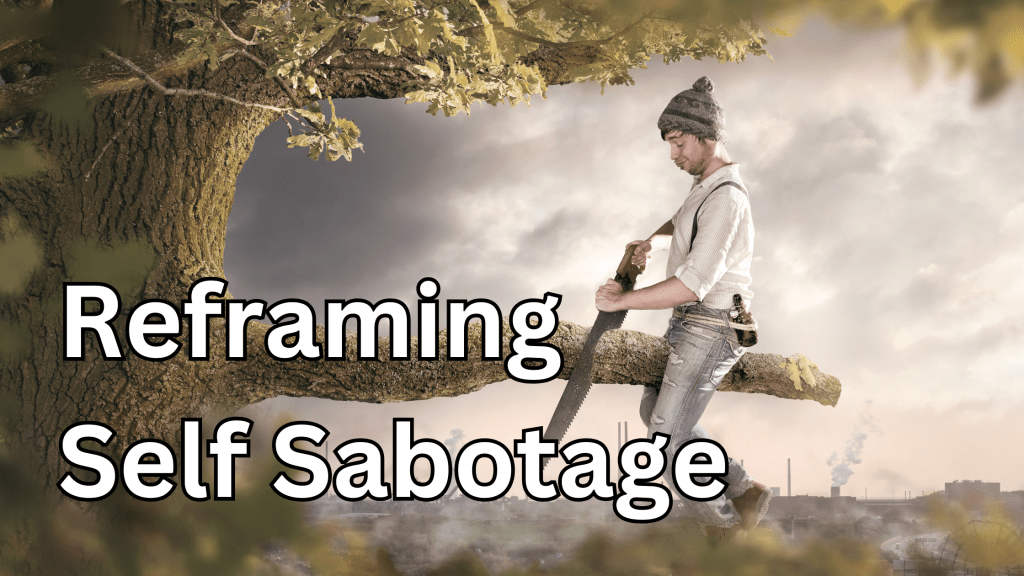
The concept of self-sabotage is deeply ingrained in our culture, often used to describe behaviors that appear counterproductive or destructive. It’s a term that carries weight, suggesting that we are actively working against our own best interests. But when we look closer—particularly through a trauma-informed lens—it becomes clear that this concept oversimplifies the intricate relationship between our mind, body, and past experiences.
In truth, self-sabotage is not a deliberate act of self-destruction. It’s often a protective mechanism or an unconscious attempt to meet deeper needs. Reframing this term is essential for healing because the language we use to describe our experiences shapes how we understand ourselves and our capacity for growth.
Why the Term “Self-Sabotage” Falls Short
The term self-sabotage implies a kind of intentional self-harm, suggesting that there is something inherently flawed or broken within us. It frames behaviors as personal failures rather than natural adaptations to past pain or unmet needs. This framing creates several challenges:
- Shame and blame: Labeling actions as self-sabotage can lead to internalized shame. We may believe we are “our own worst enemy” or incapable of change, which can reinforce cycles of guilt and inaction.
- Oversimplification: The term fails to account for the complexity of human behavior, reducing actions to “good” or “bad” rather than exploring the underlying reasons for them.
- Disconnect from the body: By labeling behaviors as sabotage, we miss an opportunity to listen to what our mind and body are truly trying to communicate.
This misunderstanding perpetuates a harmful myth: that there is something fundamentally wrong with us when we struggle. Instead of fostering healing, this belief reinforces a sense of inadequacy that can block recovery.
Why Reframing is So Important
Reframing self-sabotage as a communication from our mind and body rather than a flaw allows us to approach ourselves with greater compassion and curiosity. This shift is critical for recovery because:
- Healing requires self-compassion: Internalizing the myth of inherent flaws keeps us trapped in cycles of self-judgment. Recovery, on the other hand, begins with compassion—the recognition that we are doing the best we can with the resources we have.
- Behavior is communication: What we often see as sabotage is actually our system’s way of communicating unmet needs, fears, or unresolved trauma. For example:
- Procrastination might indicate perfectionism or fear of failure.
- Overeating could reflect a need for self-soothing in the absence of other forms of emotional regulation.
- Staying in a toxic relationship might signal fear of abandonment or the belief that we don’t deserve better.
By reframing, we can ask: What is this behavior trying to tell me?
- It fosters curiosity instead of judgment: A compassionate lens invites exploration rather than self-criticism. Instead of asking, “Why am I ruining everything?” we can ask, “What unmet need is this behavior trying to meet?”
- Growth depends on safety: To heal, we need to feel safe within ourselves. Viewing our behaviors as attempts at protection rather than sabotage creates an internal environment where growth is possible.
The Mind-Body Connection: Listening to What We Need
Our bodies and minds are always working to protect us, even when their methods don’t seem helpful on the surface. Behaviors we label as self-sabotage often arise from the nervous system’s attempts to maintain balance or avoid perceived threats. These patterns are not inherently bad; they’re survival mechanisms shaped by past experiences.
For instance:
- A person who freezes under stress might be responding to a nervous system conditioned by trauma to avoid conflict or danger.
- Someone who lashes out in anger might be protecting a vulnerable inner part that has learned aggression is the only way to be heard.
- Avoiding opportunities might stem from a fear of failure rooted in past criticism.
When we approach these patterns with curiosity, we can uncover the deeper fears, needs, and beliefs driving them. This process allows us to meet ourselves with compassion and begin creating new patterns that better serve us.
Internalizing the Myth of Flaws vs. Embracing Growth
Internalizing the idea that self-sabotage is evidence of an inherent flaw creates a self-fulfilling cycle. If we believe we are broken or incapable of change, we’re less likely to take steps toward healing. This mindset reinforces shame and disconnection, keeping us stuck in old patterns.
However, when we reframe behaviors as protective mechanisms or adaptations, we can see ourselves as whole and capable of growth. This shift helps us move from a place of:
- Shame to self-compassion: “I’m not broken; I’m protecting myself in ways that made sense at one time.”
- Judgment to curiosity: “What is this pattern trying to teach me?”
- Hopelessness to empowerment: “If I can understand the purpose of this behavior, I can create new ways to meet my needs.”
Moving Beyond the Myth of Self-Sabotage
To truly move beyond the myth of self-sabotage, we must embrace a mindset that prioritizes curiosity, compassion, and connection. Here’s how:
- Name the need: When faced with a pattern that feels destructive, pause and ask, “What need is this behavior trying to meet?”
- Create safety: Understand that your nervous system is acting out of a desire to protect you. Focus on creating safety within yourself through grounding practices, co-regulation, or supportive relationships.
- Reframe mistakes as learning: Every action—no matter how counterproductive it seems—offers an opportunity to learn. Approach your behaviors as part of a larger process of growth.
- Seek support: Sometimes, external perspectives from therapists, coaches, or trusted loved ones can help illuminate patterns we can’t see on our own.
Conclusion
What we call self-sabotage is not an indication of failure or inherent flaws but a natural part of the human learning process. It’s the body and mind’s way of communicating deeper needs, protecting against perceived threats, or navigating unhealed wounds.
Reframing this term allows us to approach ourselves and others with the compassion and curiosity necessary for true healing. When we listen to what our behaviors are trying to tell us, we open the door to understanding, growth, and transformation. In the end, what looks like sabotage is often the first step toward self-discovery.
Additional Resources
Here’s a list of helpful, supportive items from Amazon that you can use on your journey:
Books
- The Body Keeps the Score by Bessel van der Kolk
- Healing Developmental Trauma by Laurence Heller and Aline LaPierre
- Self-Compassion: The Proven Power of Being Kind to Yourself by Kristin Neff
- No Bad Parts by Richard C. Schwartz
- It Didn’t Start with You by Mark Wolynn
Audible Membership – Access many of the recommended books in audiobook form for on-the-go learning.
Somatic and Mindfulness Tools
- Yoga Blocks and Straps – Perfect for somatic movement practices like yoga or restorative poses.
- Therapy Balls or Foam Rollers – Great for tension release and body-based self-regulation.
- Weighted Blankets – Known to provide a sense of safety and calm for the nervous system.
- Essential Oil Diffuser – Use calming oils like lavender to create a soothing environment.
Nervous System Regulation Tools
- Tension Release Devices – Tools like vibrating rollers or massage guns to aid muscle relaxation.
- Fidget Toys or Stress Balls – Help reduce anxiety and regulate stress.
- Sleep Sound Machines – Support restful sleep by mimicking soothing sounds.
Thank you for taking the time to read and reflect. If you found this post helpful, I invite you to join our community! Subscribe to our mailing list below for regular insights, practical guidance, and support on your healing journey. You can also subscribe to our YouTube channel for in-depth videos, guided practices, and more.
I’d love to hear your thoughts, experiences, and any questions you may have. Please feel free to share them in the comments below—your perspective could inspire others as we continue to grow together.

Subscribe
Unlock deeper insights, inspiring stories, and transformative practices by joining our Inner Alchemy Alcove community.
Disclosure: Some of the links on this site may be affiliate links, meaning I may earn a commission at no extra cost to you. I only recommend products and services I trust. Thank you for supporting my work!
 Inner Alchemy Alcove
Leave a comment