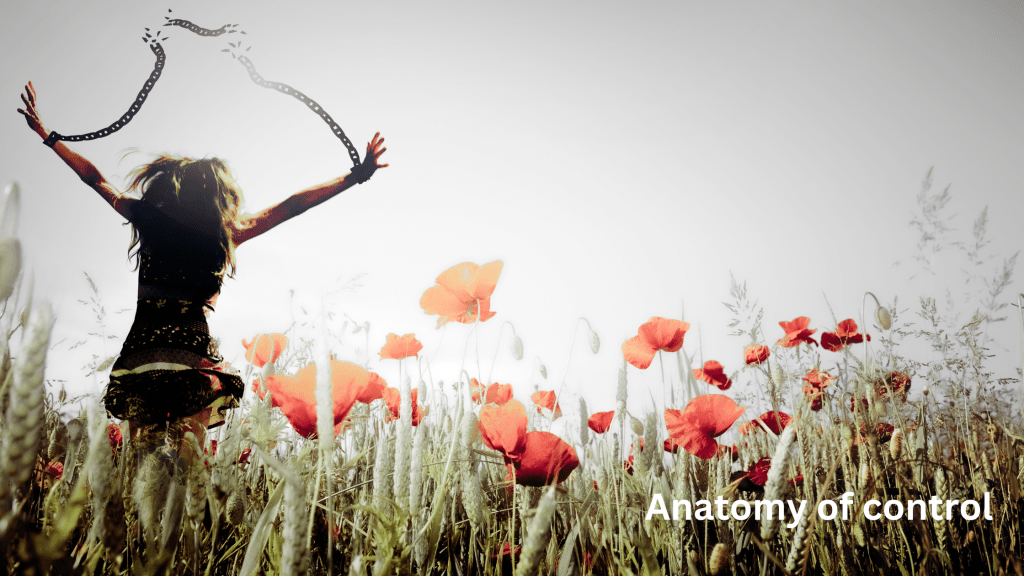
Imagine gripping a rope with all your strength, your knuckles white and your arms trembling. The harder you hold on, the more exhausted you become, yet the thought of letting go fills you with dread. This is the anatomy of control—a survival strategy rooted in fear, forged in uncertainty, and maintained by the illusion that holding on will keep you safe.
Control often begins as a protector, helping us navigate chaos and avoid pain. But over time, it can transform into a relentless taskmaster, keeping us locked in patterns of rigidity, perfectionism, and emotional suppression. Like a bird in a gilded cage, we might feel safe, but we’re not truly free.
This article takes you on a journey to understand control in all its complexity—how it forms, why we cling to it, and how it impacts our mind, body, and relationships. Through relatable stories, vivid symbolism, and actionable strategies, you’ll learn how to honor the role control has played in your life while discovering the freedom that lies beyond it. Let’s begin by uncovering the deeper truths behind the instinct to hold on so tightly.
What is Control?
Control is a mechanism that provides the illusion of safety in a chaotic world. Imagine control as a dam holding back a rushing river. While the dam ensures stability, it also blocks the natural flow of water, creating pressure that can eventually overwhelm the structure.
In the context of human behavior, control operates similarly. It helps us manage uncertainty and avoid perceived threats, but excessive control can lead to emotional rigidity, strained relationships, and even physical health issues.
The Roots of Control: Why Do We Hold On So Tight?
Control doesn’t emerge out of nowhere; it’s a response to unmet needs, fear, and trauma. By understanding its origins, we can begin to loosen its grip.
1. Control as a Reaction to Chaos
Imagine a child growing up in a home where emotions ran high—where the emotional landscape was as unpredictable as a stormy sea. Perhaps one parent erupted in anger or sadness without warning, while the other retreated into silence, unable or unwilling to provide comfort. The child, caught in the crossfire, quickly learns that stability must be created because it is not given.
In this environment, control becomes a survival strategy—a way to manage the uncontrollable chaos around them. The child learns to anticipate danger, scanning for subtle shifts in tone, body language, or mood. They suppress their own needs to avoid rocking the boat and develop habits to maintain order in an attempt to feel safe. This may look like cleaning their room obsessively, mediating family conflicts, or excelling academically to gain approval.
These adaptive behaviors often feel like safety nets in childhood. However, when carried into adulthood, they morph into rigid patterns, manifesting as perfectionism, hyper-independence, or relentless overthinking. For example:
- Perfectionism: The adult who feels a compulsion to micromanage every detail, believing that mistakes will lead to judgment or rejection.
- Hyper-independence: The person who refuses to ask for help, convinced that vulnerability is a liability.
- Overthinking: The individual who replays conversations and decisions endlessly, trying to predict and prevent negative outcomes.
How This Pattern Affects the Body and Mind
The effects of control as a reaction to chaos don’t stop at behavior; they embed deeply into the nervous system. Constant hypervigilance—being on high alert—leads to chronic stress. This can manifest as tightness in the body, digestive issues, fatigue, or even autoimmune disorders. The mind, too, becomes trapped in a loop of “what ifs,” always bracing for the worst.
Using tools like somatic therapy, breathwork, or polyvagal-informed practices can help interrupt this cycle. For example:
- Somatic Awareness: Gently noticing where control shows up in the body (e.g., clenched jaw, tight shoulders) can build a bridge to self-awareness.
- Grounding Practices: Techniques like grounding through the senses (e.g., focusing on the feel of the earth under your feet) can soothe a hyperactive nervous system.
- Safe Exploration of Vulnerability: Slowly practicing trust—such as sharing a small vulnerability with a trusted person—can begin to challenge the need for total independence.
A New Perspective on Chaos
Reframing chaos is a key step in letting go of control. Rather than seeing chaos as an enemy, it can be viewed as a natural part of life—a space where growth and creativity are born. For example, the unpredictable nature of a storm brings rain that nourishes the earth. Similarly, learning to navigate uncertainty can open us to experiences of joy, connection, and resilience.
Letting go of control isn’t about abandoning boundaries or structure. Instead, it’s about trusting in our ability to handle life’s messiness without needing to orchestrate every detail. By softening the grip on control, we open ourselves to a more expansive way of being—one where we can move through life with greater ease and authenticity.
2. Attachment Wounds and Control
Control is often rooted in deeper attachment wounds that stem from early experiences with caregivers. Attachment theory, developed by John Bowlby and Mary Ainsworth, explains how our early relationships shape the way we connect with others and navigate intimacy as adults. When these early bonds are inconsistent, neglectful, or harmful, control becomes a way to compensate for unmet emotional needs.
Let’s explore how control manifests through the lens of attachment styles, using stories, symbolism, and practical examples.
Anxious Attachment: Clinging to Control to Prevent Abandonment
Imagine a child who grows up with caregivers who are emotionally unpredictable—sometimes present, other times distant. This child learns that love and safety are conditional and fleeting. They begin to believe that the only way to secure connection is through vigilance: monitoring the other person’s moods, behaviors, and reactions to prevent abandonment.
In adulthood, this hyper-awareness becomes a form of control. Anxiously attached individuals may try to manage relationships by overextending themselves, becoming “people-pleasers,” or seeking constant reassurance. The underlying belief is, If I do everything right, they won’t leave me.
For example:
- Control in Relationships: Jane, an anxiously attached woman, constantly texts her partner when they’re apart, needing to know where they are and who they’re with. If her partner takes too long to respond, her mind spirals into worst-case scenarios, prompting her to send even more messages to “fix” the perceived distance.
- The Symbolism of Control as a Lifeline: For anxiously attached individuals, control can feel like holding onto a rope in a stormy sea. It provides the illusion of stability, even though the waters of connection are turbulent.
Healing begins by addressing the fear of abandonment and cultivating inner security. Practices like parts work, where the “fearful child” part is acknowledged and soothed, can help. Over time, the individual learns to trust that they are worthy of love without needing to control others.
Avoidant Attachment: Over-Controlling to Avoid Vulnerability
Now imagine a child who grows up with caregivers who are emotionally unavailable or dismissive. When the child seeks comfort, they are met with rejection or indifference. Over time, they internalize the belief that depending on others is unsafe. To cope, they learn to suppress their emotions and create emotional distance as a form of self-protection.
In adulthood, this manifests as avoidant attachment. Avoidantly attached individuals may use control to maintain independence and avoid the perceived risks of vulnerability. They might tightly manage their emotions, suppressing anything that feels too “messy,” or meticulously organize their environment to create a sense of predictability.
For example:
- Control in Emotions: Marcus, an avoidantly attached man, struggles to open up in relationships. Whenever his partner asks him to share his feelings, he shuts down or changes the subject. He believes that if he remains emotionally neutral, he can avoid the pain of rejection.
- Control in the Environment: To avoid chaos, Marcus also obsesses over maintaining a clean, minimalist home. His perfectly arranged living space becomes a physical representation of his desire to control his inner world.
- The Symbolism of Control as Armor: For avoidantly attached individuals, control can be likened to a suit of armor—impenetrable, protective, but ultimately isolating.
Healing for avoidant attachment involves slowly allowing vulnerability into their lives. Practices like somatic experiencing can help them notice and safely express suppressed emotions. Gradual exposure to connection—such as sharing small feelings or asking for help—can begin to dismantle the walls they’ve built.
The Shared Underpinning of Fear
Whether the attachment wound stems from anxiety or avoidance, the core issue is often fear:
- Fear of abandonment for the anxiously attached.
- Fear of vulnerability for the avoidantly attached.
Control becomes a coping mechanism to manage these fears. However, control often backfires. For the anxiously attached, excessive clinging can push others away. For the avoidantly attached, over-controlling emotions and avoiding connection can lead to loneliness and disconnection.
A Path Toward Healing
Recognizing attachment wounds and how they drive control is a critical first step in healing. Here are some practical approaches:
- Inner Child Work: Visualize the younger version of yourself who felt unsafe in relationships. Imagine comforting them, letting them know they are no longer alone and that they can rely on you to meet their emotional needs.
- Co-Regulation with Safe Relationships: Slowly building trust with a therapist, friend, or partner who respects your boundaries can help rewire attachment patterns.
- Somatic Awareness: Notice where attachment-related fear shows up in your body. For example, tightness in the chest may signal anxiety, while a numb or heavy feeling may indicate avoidance. Practices like grounding or breathwork can help release these sensations.
- Affirmations and Reframes: For anxious individuals, affirmations like I am enough as I am, and I don’t have to work for love can ease the need for reassurance. For avoidant individuals, reframes like Vulnerability is not weakness; it’s strength can encourage openness.
3. Shame as a Driver of Control
At the root of many control patterns lies shame—a deeply held belief that we are fundamentally flawed, unworthy, or broken. Shame is a visceral emotion that touches every part of us, often going unnoticed beneath the surface but influencing how we show up in the world. In the presence of shame, control becomes a way to mask our vulnerabilities and protect ourselves from rejection, judgment, or ridicule.
The Anatomy of Shame
Shame differs from guilt. Guilt says, I made a mistake. Shame, however, whispers, I am the mistake. This difference is profound, as shame doesn’t simply critique what we do but who we are.
For many people, shame originates in childhood, when caregivers, teachers, or peers communicated—intentionally or not—that their worth was conditional. Criticism, neglect, or even overly high expectations can plant the seed of shame, which grows into a desire to control how others perceive us.
For example:
- A child who is chastised for spilling milk might internalize the belief that they are clumsy and undeserving of kindness.
- A student who is told they’ll never succeed unless they’re the best might develop perfectionism as a shield against perceived inadequacy.
Perfectionism: Shame Disguised as Control
One of the most common manifestations of shame-driven control is perfectionism. The perfectionist operates under the illusion that if they can flawlessly execute every task, meet every expectation, and avoid every mistake, they will finally be “enough.”
Consider Lisa, a high-achieving professional:
- Lisa’s childhood was marked by a critical parent who demanded excellence in all areas of her life. Any grade less than an A was met with disappointment, and achievements were acknowledged only briefly before the next goal was set.
- Now, as an adult, Lisa meticulously controls her work performance, appearance, and even her social interactions. She believes that if she makes no mistakes, no one will see her “unworthiness.”
The tragedy of perfectionism is that it creates a cycle of striving without fulfillment. Lisa might earn accolades and admiration, but her shame convinces her it’s never enough. Each success feels like a temporary reprieve from the crushing weight of self-criticism.
Symbolism: The Mask of Shame
Shame-driven control can be likened to wearing a mask—one that hides the parts of ourselves we fear others will reject. This mask might look like competence, beauty, or kindness, but it’s heavy to wear. Beneath it, the person feels unseen and isolated, trapped by the very strategy meant to protect them.
A poignant example comes from mythology:
- In Greek mythology, the character of Narcissus is often interpreted as an embodiment of shame. While Narcissus appears obsessed with his reflection, his preoccupation reflects a deeper insecurity. He controls his image to such an extent that he disconnects from the world, ultimately losing himself.
This mirrors how perfectionism, rooted in shame, creates disconnection. By focusing so intently on controlling how others perceive us, we can lose touch with our authentic selves.
Other Shame-Driven Control Patterns
While perfectionism is a prominent example, shame can drive other forms of control:
- People-Pleasing: The belief that we must meet everyone’s needs to be worthy of love.
- Example: Emma says “yes” to every request at work, even when she’s overwhelmed, because she fears being labeled lazy or unreliable.
- Body Image Control: Attempting to control appearance to avoid judgment.
- Example: David spends hours at the gym, obsessing over his diet and physique, not out of health concerns but to avoid feeling “less than” in social settings.
- Rigid Morality: Using strict rules or moral codes to feel in control of perceived flaws.
- Example: Ben holds himself to impossibly high ethical standards, harshly judging himself for even minor lapses, believing this will redeem his “brokenness.”
Shame and the Nervous System
Shame isn’t just a psychological experience—it’s deeply somatic. When we feel shame, the body often reacts with:
- Collapsing Posture: Shoulders slumped, head down, as if trying to make oneself small or invisible.
- Flush of Heat: A physical manifestation of embarrassment or the need to “escape.”
- Tightness in the Chest or Stomach: Reflecting the intense emotional weight of shame.
In these moments, control can feel like the only way to regain equilibrium. However, this is a false sense of security, as control doesn’t address the root of the shame; it merely covers it up.
Breaking Free from Shame-Driven Control
Healing from shame begins with self-compassion and self-awareness. Here are some tools to address shame and its control patterns:
- Somatic Work: Notice where shame lives in your body. Does your chest tighten? Do you feel a lump in your throat? Use grounding techniques, like deep breathing or placing a hand over your heart, to soothe these sensations.
- Parts Work: Dialogue with the part of you that feels shame. What does it need? Often, this part just wants to feel seen and accepted.
- Self-Compassion Practices: When the inner critic surfaces, gently counter it with kindness. Instead of saying, “I’m such a failure,” try, “I’m human, and it’s okay to make mistakes.”
- Challenging Perfectionism: Give yourself permission to be imperfect. Start small—maybe by letting one typo go in an email or wearing something comfortable instead of “perfect.”
The Path Toward Authenticity
Shame convinces us that we need to control everything to be acceptable, but the truth is, we are worthy as we are. Letting go of control allows us to embrace our imperfections and connect with others on a deeper, more authentic level.
4. Cultural Conditioning and the Myth of Control
Western societies often glorify control as a hallmark of success, strength, and personal achievement. We are inundated with messages that equate discipline, independence, and emotional restraint with virtue. While these qualities have their place, they can also create a cultural narrative that shames vulnerability, spontaneity, and connection to our emotional selves. This cultural conditioning fosters an illusion: that with enough control, we can master our lives, avoid failure, and shield ourselves from pain.
The Cultural Ideal of Control
From an early age, Western cultures socialize individuals to believe that control is not just a tool but a measure of one’s value:
- Discipline as a Virtue: “Success is earned through hard work and self-discipline.”
- Emotional Restraint: “Don’t let your feelings get the better of you.”
- Self-Reliance: “If you want something done right, do it yourself.”
These ideas can create an inner dialogue that sees emotions as weaknesses, mistakes as failures, and interdependence as a flaw. As a result, people feel pressured to suppress natural instincts, emotions, and needs in favor of projecting competence and control.
Control in Action: The Pursuit of the “Perfect Life”
Consider Emma, a working mother in her mid-30s:
- She juggles a demanding career, parenting responsibilities, and maintaining a picture-perfect household.
- Emma’s social media is a curated showcase of her “ideal” life—clean kitchens, happy kids, and professional milestones.
- Beneath the surface, Emma struggles with burnout, loneliness, and a sense that no matter how hard she tries, she’s falling short.
Emma’s story highlights how cultural conditioning reinforces the myth of control. The pressure to “have it all” creates a relentless drive for perfection, leaving little room for rest, self-compassion, or authentic connection.
The Role of Shame in Cultural Control
Cultural narratives often perpetuate shame, particularly when individuals fall short of societal ideals. For instance:
- Men: In many cultures, men are taught to suppress emotions and prioritize stoicism. This creates a stigma around vulnerability and reinforces control over emotional expression.
- Women: Women often face expectations to balance professional success with caregiving, looking flawless while doing both. This perpetuates a cycle of perfectionism and self-monitoring.
Symbolically, this cultural conditioning can feel like wearing a mask:
- Men may wear the mask of “strength,” hiding their fears and struggles.
- Women may wear the mask of “effortlessness,” concealing their exhaustion and self-doubt.
These masks alienate individuals from their true selves and others, creating a sense of isolation despite outward appearances of control.
The Myth of Control: A Cultural Illusion
At its core, the cultural obsession with control reflects a deeper existential fear: the uncertainty and chaos inherent in life. Western societies often seek to “rise above” these natural forces, emphasizing human dominance over nature and emotions alike.
Symbolically, this mirrors the story of Icarus from Greek mythology:
- Icarus’s father, Daedalus, constructs wax wings to escape captivity, warning Icarus not to fly too close to the sun.
- Ignoring the warning, Icarus seeks ultimate control over his flight, soaring higher and higher until the sun melts his wings and he falls to his death.
This tale serves as a metaphor for how the illusion of control can lead to disconnection and eventual collapse. When we attempt to dominate natural forces—whether external (nature) or internal (emotions)—we lose balance and set ourselves up for failure.
The Cost of Cultural Conditioning
The relentless pursuit of control has wide-reaching consequences, both individual and societal:
- Emotional Suppression: People learn to bottle up emotions rather than express them, leading to anxiety, depression, and even physical illness.
- Example: John, a corporate executive, prides himself on being unshakable. His refusal to acknowledge his stress, however, leads to chronic migraines and insomnia.
- Disconnection from Others: The cultural emphasis on self-reliance discourages asking for help, fostering loneliness and isolation.
- Example: Sarah avoids sharing her struggles with friends, fearing they’ll see her as “needy” or weak.
- Burnout: The idealization of control fuels overwork and perfectionism, leaving individuals exhausted and unfulfilled.
- Example: Ravi, a startup founder, works 80-hour weeks in pursuit of success, but his health and relationships deteriorate.
A Cross-Cultural Perspective on Control
Interestingly, not all cultures place the same value on control. Many Indigenous and Eastern traditions emphasize harmony with nature, interdependence, and acceptance of uncertainty. For example:
- Taoism: Central to Taoist philosophy is the concept of “wu wei,” or effortless action. This principle encourages flowing with life rather than controlling it.
- Symbolism: A river doesn’t fight its course; it flows around obstacles, finding its way naturally.
- Ubuntu Philosophy (South Africa): Ubuntu emphasizes community and interconnectedness, valuing collective well-being over individual dominance.
These perspectives challenge the Western ideal of control, offering alternative ways to navigate life that prioritize balance, connection, and authenticity.
Healing from Cultural Conditioning
To break free from cultural myths of control, we must first question the societal narratives we’ve internalized. Here are steps to begin this process:
- Examine Your Beliefs: Reflect on your relationship with control. Ask yourself:
- What societal messages about control have I absorbed?
- How do these beliefs affect my emotions, behaviors, and relationships?
- Reconnect with Vulnerability: Practice embracing emotions as natural and valuable. Start small—share a fear or struggle with someone you trust.
- Redefine Success: Shift from a control-based definition of success (perfection, discipline) to one rooted in fulfillment, connection, and well-being.
- Example: Instead of focusing solely on career milestones, celebrate moments of joy and presence in your daily life.
- Explore Alternative Philosophies: Learn from cultures that value flow, community, and interdependence. Experiment with practices like meditation, mindfulness, or yoga to cultivate acceptance.
Toward a New Narrative
By challenging the myth of control, we open ourselves to a richer, more authentic way of being—one that embraces life’s unpredictability, values connection over perfection, and honors the wisdom of our emotions. Breaking free from cultural conditioning is not about abandoning discipline or ambition but about integrating them with vulnerability, spontaneity, and self-compassion.
The Anatomy of Control in Mind and Body
Control manifests differently in the mind, emotions, and body. Understanding these layers can help us recognize when control is no longer serving us.
Cognitive Control
- Overanalyzing situations to predict every possible outcome.
- Rigid thought patterns, such as “If I don’t do this perfectly, I’ll fail.”
Emotional Control
- Suppressing emotions like anger or sadness to appear “strong.”
- Distracting oneself with work or habits to avoid vulnerability.
Somatic Control
- Chronic tension in the body, such as tight shoulders or shallow breathing.
- Using food, exercise, or posture as a way to regulate emotions.
Breaking Free: How to Let Go of Control
Letting go of control doesn’t mean embracing chaos; it means learning to trust yourself and the world around you. Here are actionable steps to help you shift from control to freedom.
1. Understand Your Control Patterns
To break free from control, it’s essential to first explore your patterns and their origins. Reflect on your behaviors and the underlying fears or beliefs driving them:
- What am I trying to protect?
Control often stems from a deep-rooted desire to avoid perceived danger or discomfort. Are you trying to protect your emotional vulnerability, past trauma, or your sense of identity? - What would happen if I let go?
Challenge the narrative that letting go leads to disaster. What might you discover about yourself if you allowed life to unfold without trying to steer it?
Therapies like NARM (NeuroAffective Relational Model) or IFS (Internal Family Systems) can provide a structured, compassionate way to explore these patterns and their origins. Both models help you gain insight into your internal system of parts, which may include protective mechanisms that stem from childhood trauma or attachment wounds. By understanding the “why” behind your control, you can gradually loosen its grip.
2. Reconnect with Your Body
Control often resides in the body, manifesting as tightness, tension, or rigidity. The body holds memories of past trauma and emotional struggles, making it a critical area to focus on when learning to let go. Practices like yoga therapy, TRE (Trauma Release Exercises), and the Feldenkrais Method help to release stored tension, re-establish body awareness, and restore a natural sense of flow.
Symbolism: The River
Think of your body as a river. Instead of damming the flow, allow the water to move freely, trusting that it will find its natural course. Just as a river’s course can be redirected but always finds its way, your body’s movements and sensations can guide you to healing. This process requires patience and trust in the inherent wisdom of your body.
Consider integrating grounding practices such as body scans or somatic tracking to increase awareness of where you’re holding tension and how to release it consciously.
3. Embrace Vulnerability
Control often hides vulnerability, convincing you that to be in control is to remain safe. However, vulnerability is not weakness; it is a doorway to deeper connection and growth. Start small by sharing your thoughts or emotions with a trusted friend or through journaling. Vulnerability opens the door to your authentic self and invites the world to meet you as you are.
Reflect on these prompts:
- What does vulnerability feel like in my body?
- Where do I feel the impulse to hide or control my vulnerability?
- What would it feel like to embrace vulnerability as a source of strength?
The more you allow yourself to be seen, the more you will realize that the world won’t collapse when you let go of the masks you’ve worn for protection.
4. Practice Trust in Small Steps
Trust is a muscle that grows stronger the more you exercise it. Start with low-stakes situations where letting go of control feels safer. This helps build your confidence and tolerance for uncertainty.
- Allow a day to unfold without a strict plan.
Surrender the tight grasp of scheduling and see what emerges when you allow the day to take shape naturally. Notice how it feels to move through life with more openness and less attachment to outcomes. - Delegate a task at work and trust the outcome.
Trusting others with responsibilities can be a huge step. By letting go of the need to manage every detail, you make room for collaboration, creativity, and growth. Observe how delegating feels, and let yourself relax into the process.
Each small step towards trust builds your capacity for greater freedom. Notice the feelings that arise when you let go and celebrate those moments, as they’re signs of healing.
5. Engage in Symbolic Rituals
Symbolic rituals can serve as powerful tools for consciously releasing control. They allow you to externalize the internal process of surrender and anchor it with tangible, meaningful acts.
- Write down a fear on a piece of paper and burn it.
Fire symbolizes transformation—watching the paper burn can represent releasing the fear and setting an intention for freedom. As you engage in this ritual, pair it with deep breathwork to center your body and mind in the present moment, allowing your nervous system to feel supported. - Create a release ritual.
You can also practice more personalized rituals. For example, take a walk in nature and offer up the need for control to the wind or the earth. Symbolically entrusting the elements with your fear or control can make the process of letting go feel more concrete and grounded.
Rituals provide a way to honor the process, and they can help you shift from feeling overwhelmed by control to embracing the flow of life.
From Control to Freedom: A Lifelong Journey
Control is neither good nor bad—it’s simply a strategy we’ve developed to navigate life’s uncertainties. By understanding its roots, honoring its protective role, and practicing new ways of being, we can transform our relationship with control.
Freedom isn’t about relinquishing all responsibility. It’s about learning to trust the flow of life, knowing that you have the inner resources to navigate whatever comes your way. Like a river that flows naturally, your life can find balance when you stop building dams and start trusting the current.
Additional Resources
Here’s a list of helpful, supportive items from Amazon that you can use on your journey:
Books
- “Waking the Tiger: Healing Trauma” by Peter A. Levine, Ph.D.
- “Healing Developmental Trauma: How Early Trauma Affects Self-Regulation, Self-Image, and the Capacity for Relationship” by Laurence Heller, Ph.D., and Aline LaPierre, Psy.D.
- “Complex PTSD: From Surviving to Thriving” by Pete Walker.
- “Letting Go: The Pathway of Surrender” by David R. Hawkins, M.D., Ph.D.
- “The Wisdom of Insecurity: A Message for an Age of Anxiety” by Alan Watts.
- “Radical Acceptance: Embracing Your Life with the Heart of a Buddha” by Tara Brach.
- “Self-Compassion: The Proven Power of Being Kind to Yourself” by Kristin Neff.
Audible Membership – Access many of the recommended books in audiobook form for on-the-go learning.
Somatic and Mindfulness Tools
- Yoga Blocks and Straps – Perfect for somatic movement practices like yoga or restorative poses.
- Therapy Balls or Foam Rollers – Great for tension release and body-based self-regulation.
- Weighted Blankets – Known to provide a sense of safety and calm for the nervous system.
- Essential Oil Diffuser – Use calming oils like lavender to create a soothing environment.
Nervous System Regulation Tools
- Tension Release Devices – Tools like vibrating rollers or massage guns to aid muscle relaxation.
- Fidget Toys or Stress Balls – Help reduce anxiety and regulate stress.
- Sleep Sound Machines – Support restful sleep by mimicking soothing sounds.
Thank you for taking the time to read and reflect. If you found this post helpful, I invite you to join our community! Subscribe to our mailing list below for regular insights, practical guidance, and support on your healing journey. You can also subscribe to our YouTube channel for in-depth videos, guided practices, and more.
I’d love to hear your thoughts, experiences, and any questions you may have. Please feel free to share them in the comments below—your perspective could inspire others as we continue to grow together.

Subscribe
Unlock deeper insights, inspiring stories, and transformative practices by joining our Inner Alchemy Alcove community.
Disclosure: Some of the links on this site may be affiliate links, meaning I may earn a commission at no extra cost to you. I only recommend products and services I trust. Thank you for supporting my work!
 Inner Alchemy Alcove
Leave a comment