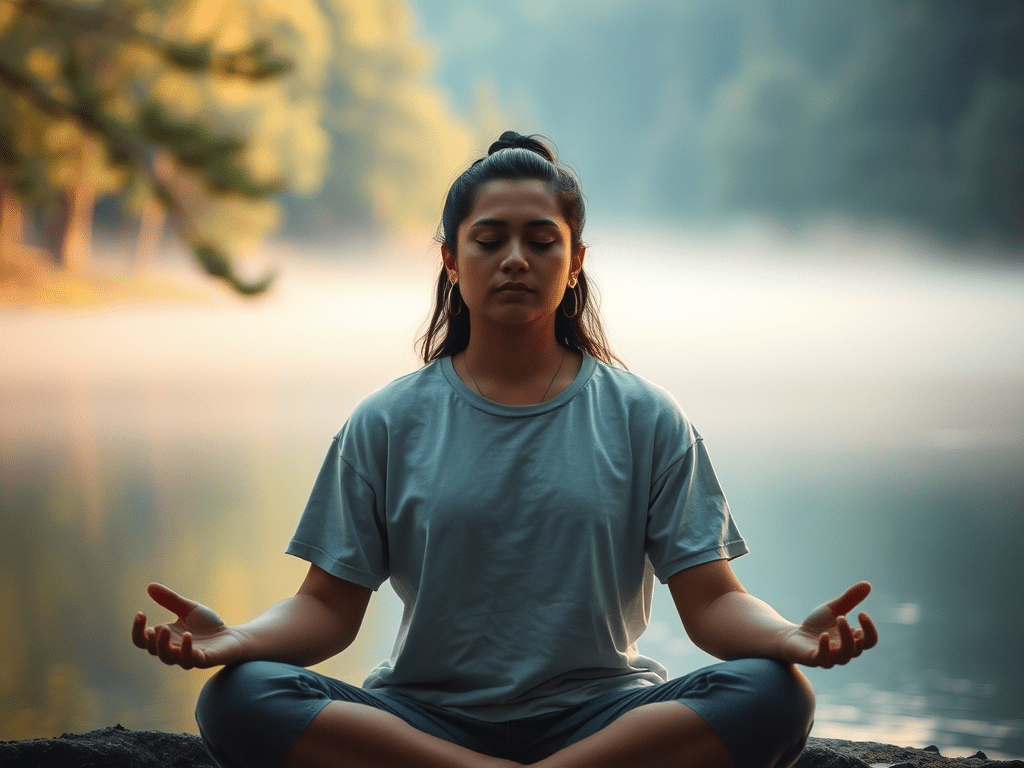
When your environment doesn’t feel safe, your body knows it. Your heart races, your breath shortens, and you might crave someone—anyone—to bring you back to calm. But what if, instead, you could learn to be that anchor for yourself? Co-regulation, or calming the nervous system through connection with others, is an essential part of building resilience and maintaining emotional balance. Yet, there are times when we find ourselves alone, or without access to that shared space of calm. People can’t help co-regulate our nervous system if it is struggling to maintain balance on it’s own too. In these moments, self-regulation becomes an invaluable skill—a pathway to reclaiming inner stability and well-being, even in solitude.
Learning to self-regulate not only nurtures our independence but also protects us from veering into co-dependence. When we rely solely on others to feel safe and grounded, we run the risk of creating an unhealthy dependency. This blog will explore why self-regulation is essential, provide in-depth insights into practical self-regulation techniques, and explain how to strike a balance between co-regulation and self-reliance for healthier, more resilient relationships.
Why Self-Regulation Matters When Co-Regulation Isn’t Possible
In the early stages of healing or personal growth, our nervous system often depends on the presence of others to feel safe. This natural need for co-regulation is hardwired into us from birth. However, if we overly depend on external sources to soothe our anxiety or tension, it can lead to co-dependence, where our sense of well-being is tied to the availability or responses of others.
Learning to self-regulate allows us to be in control of our emotional state, regardless of whether someone is there to comfort us. This autonomy not only empowers us but also enhances our capacity for healthy interdependence, where we can enjoy connections without relying on them exclusively for stability. Self-regulation also helps us build resilience—by learning to manage our emotions independently, we strengthen our nervous system’s ability to return to a calm baseline after stress.
Self-Regulation Techniques for When You’re on Your Own
Here’s a deep dive into self-regulation tools that anyone can practice when co-regulation with others isn’t available. Each technique is designed to engage the body and mind, helping to shift your nervous system from a state of fight-or-flight into one of calm and safety.
1. Name Your Feelings: Acknowledging the Power of Words
Naming our emotions—whether it’s sadness, anxiety, anger, or confusion—creates a form of distance. This practice, known as “affect labeling,” activates the prefrontal cortex, helping you observe emotions without being consumed by them. By naming what you’re feeling, you’re gently acknowledging your emotional state, which in itself can lower emotional intensity.
How to Practice:
When you feel overwhelmed, pause and scan your body for sensations. Identify and name each emotion or sensation, either out loud or in writing. For example, you might say, “I’m feeling tension in my chest and some unease.” This simple act of labeling reduces your emotional load and shifts your focus to a place of mindful awareness.
2. Slow Breathing: The Simple Yet Profound Act of Calming
Breathing slowly and deeply activates the vagus nerve, which plays a key role in calming the nervous system. A slow, deliberate breath can signal to your brain that you’re safe, which gradually shifts you out of fight-or-flight mode.
How to Practice:
Try the 4-7-8 breathing technique. Inhale through your nose for a count of four, hold the breath for seven, and exhale through your mouth for a count of eight. Repeat this cycle a few times, allowing your body to relax with each breath. This practice is especially helpful during moments of anxiety or panic, as it gently coaxes the body back into a state of calm.
3. Physical Movement: Walk, Stretch, or Dance to Release Tension
Movement helps release pent-up energy and stress hormones like cortisol. When we’re anxious or tense, energy builds up in the body, and if it’s not released, it can contribute to a feeling of being trapped. Movement helps channel this energy out of the body, leaving us feeling lighter and more at ease.
How to Practice:
Go for a short walk, stretch your body, or even put on a favorite song and let yourself dance. Walking in nature, if possible, can enhance this effect, as natural environments help calm the mind and body. Moving your body mindfully sends a message to your brain that it’s okay to relax.
4. Creative Expression: Draw, Color, or Journal Your Emotions
When words fail, creative expression can provide a safe outlet. Drawing, coloring, and journaling allow us to express complex emotions in a nonverbal way, releasing them from our system without needing to analyze or justify them.
How to Practice:
Take a few minutes to draw or color, even if you’re not artistically inclined. Alternatively, try “stream-of-consciousness” journaling, where you write continuously for a set amount of time without worrying about grammar or structure. These practices help externalize emotions, making them feel less overwhelming.
5. Engage in Positive Self-Talk: Rewriting Your Inner Dialogue
Self-talk is the conversation we have with ourselves, and it profoundly influences our mental state. When we’re overwhelmed, our inner dialogue often turns negative and self-critical, heightening feelings of distress. Replacing negative self-talk with positive affirmations or gentle reminders of your resilience can shift your emotional experience in the moment.
How to Practice:
When you catch yourself in a cycle of negative thinking, pause and consciously reframe the thought. For example, if you’re feeling anxious and thinking, “I can’t handle this,” reframe it to, “I’m doing the best I can, and I will get through this.” Practice speaking to yourself with kindness, as you would to a friend in need. Over time, these positive affirmations build self-compassion and help regulate your mood.
6. Listen to Music: The Healing Power of Sound
Music has a direct impact on our emotions and physiology. Upbeat music can lift our spirits, while calming music can slow our heart rate and bring us back to a state of ease. The rhythms and melodies work in harmony with our nervous system, making music a powerful tool for self-regulation.
How to Practice:
Create different playlists for different emotional states—uplifting tunes for when you need a mood boost, soft and slow tracks for when you need to unwind. Consider adding nature sounds, like rain or ocean waves, as these can have a grounding effect on the nervous system. Take a few moments to immerse yourself in the music, allowing it to soothe your mind and body.
7. Use Fidgets or Sensory Tools: Grounding Through Touch and Texture
Engaging with sensory tools, like fidgets or textured objects, can redirect focus from overwhelming thoughts to physical sensations, which can have a calming effect. These tools help bring you back to the present moment, reducing anxiety and grounding you.
How to Practice:
Carry a small, textured object—like a stress ball, a piece of fabric, or a stone—that you can easily hold or rub between your fingers. When anxiety arises, let yourself focus on the sensation of touching and holding the object. Pay attention to its weight, texture, and temperature. This sensory grounding technique connects you with your physical body and draws attention away from ruminating thoughts.
8. Write in a Journal: Reflect and Release
Journaling can be a powerful tool for processing emotions and releasing mental clutter. Writing out your thoughts can help you organize them, make sense of complex feelings, and reduce the mental burden of carrying them silently.
How to Practice:
Set aside 5-10 minutes for “free writing,” where you allow your thoughts to flow onto the page without censoring or editing. Let yourself write about what’s on your mind, even if it feels chaotic or disconnected. By transferring your thoughts to paper, you create space for clarity and calm. Some find it helpful to end with a gratitude list, highlighting positive aspects of the day to shift focus.
Avoiding Co-Dependence: Learning to Balance Co-Regulation and Self-Reliance
While human connection is essential for well-being, an over-reliance on others to regulate our emotions can lead us down the path of co-dependence. This happens when we become emotionally dependent on another person to the point where our sense of stability and security hinges entirely on them. Balancing co-regulation with self-regulation enables us to enjoy meaningful connections without losing ourselves in them.
1. Building a “Toolbox” of Self-Regulation Techniques
Just as the strategies listed above provide different ways to self-soothe, having a diverse “toolbox” gives you options when stress or anxiety strikes. You can mix and match techniques, depending on what resonates in the moment. By practicing and refining these skills, you create an inner foundation that doesn’t rely solely on others for calm.
2. Practicing Mindful Awareness of Triggers and Patterns
Becoming aware of your triggers can prevent the need for excessive co-regulation. Understanding what situations or thoughts tend to unsettle you empowers you to take proactive steps to manage those emotions. The more you’re able to identify and accept your own needs, the less likely you’ll feel reliant on others to soothe you.
3. Cultivating Healthy Boundaries in Relationships
Healthy boundaries are essential in any relationship, especially for those who may be prone to co-dependence. Boundaries serve as a reminder that while relationships can provide support, they should not come at the cost of personal autonomy. By prioritizing self-regulation, you can maintain a sense of independence while still deeply valuing your relationships.
4. Redefining “Connection”
Regulation doesn’t always have to involve another person. Connecting with nature, pets, art, or spirituality can provide a deep sense of grounding. This broadens the definition of connection and co-regulation, making it accessible in various forms that don’t rely solely on interpersonal interaction. Nature, for instance, can offer profound co-regulation through its calming effect on the nervous system, helping you feel held and supported. By redefining connection in this expansive way, we empower ourselves with tools to feel grounded and regulated in the presence or absence of others.
Conclusion: The Power of Self-Regulation for Inner Balance and Resilience
Learning to self-regulate is an act of self-care and self-respect. It builds resilience, fosters emotional independence, and gives us a greater capacity to engage with others from a place of authenticity rather than need. While co-regulation is a beautiful and necessary part of human experience, knowing how to calm and center ourselves when alone is equally vital.
By practicing these self-regulation techniques and balancing them with healthy co-regulation, you empower yourself to navigate life’s challenges from a place of inner strength. This creates a solid foundation for deeper, more fulfilling connections that are rooted in choice rather than dependency—a foundation upon which true interdependence can flourish.
Remember, self-regulation is not about replacing connection with others but about developing a toolkit that allows you to meet yourself wherever you are. Embracing this balance is a journey, but one that promises a richer and more resilient emotional life.
Thank you for taking the time to read and reflect. If you found this post helpful, I invite you to join our community! Subscribe to our mailing list below for regular insights, practical guidance, and support on your healing journey. You can also subscribe to our YouTube channel for in-depth videos, guided practices, and more.
I’d love to hear your thoughts, experiences, and any questions you may have. Please feel free to share them in the comments below—your perspective could inspire others as we continue to grow together.

Subscribe
Unlock deeper insights, inspiring stories, and transformative practices by joining our Inner Alchemy Alcove community.
Thank you so much for your thoughtful feedback. I’m so glad to hear that what I shared was useful and…
Dear Lauren I just want to thank you for your article, and wider work. Your YouTube channel also. I tried…
This explains so much of my relationships, all of them actually. I have no relationships, other than work, and they…
Absolutely, self-regulation is such a powerful tool! It’s all about finding that balance and maintaining control over our emotions and…


One response to “The Power of Self-Regulation: How to Soothe Your Nervous System When Co-Regulation Isn’t an Option”
-
Absolutely, self-regulation is such a powerful tool! It’s all about finding that balance and maintaining control over our emotions and reactions. Keeping arousal levels in check can be crucial for staying focused and calm, especially in high-pressure situations. It’s like being your own anchor in a stormy sea. 🌊
When it comes to self-regulation, there are so many techniques to explore. From mindfulness and deep breathing to physical movement and creative expression, each method offers a unique way to soothe the nervous system and maintain inner stability. It’s all about finding what works best for you and incorporating it into your daily routine.
And hey, it’s not just about keeping things low-key. Self-regulation can also help you harness your energy and channel it into productive and positive outlets. It’s about being in tune with yourself and knowing when to dial things up or down. Keep rocking that self-regulation journey! 🌟✨

 Inner Alchemy Alcove
Leave a comment